Botox in Squamish:
Expert RN Care for Natural-Looking Results
At Young Skin, every Botox Cosmetic treatment is administered by a registered nurse with over two decades of critical care and trauma nursing experience and 10+ specialized aesthetic certifications. No rushed appointments.

A single-practitioner medical aesthetics practice serving Squamish and the Sea-to-Sky corridor.
No pressure. Just precise, personalized care from the same clinician every time.
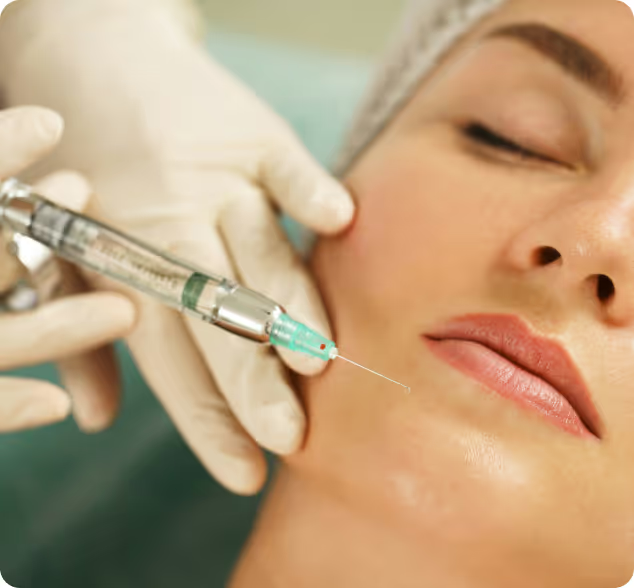
Close-up of a person receiving a Botox injection in the cheek from a gloved medical professional.

Treatment Areas & What to Expect

Botox Cosmetic is Health Canada–approved and the neurotoxin with the longest clinical track record in medical aesthetics. It works by temporarily relaxing the muscles that create dynamic expression lines.

Common treatment areas:
Forehead lines

Horizontal lines from brow elevation — typically 10–20 units

Glabella (frown lines)

Vertical lines between the brows — typically 20–25 units

Crow's feet

Lines radiating from the outer eye corners — typically 10–15 units per side

Brow lift

Small precision placement to lift and open the eye area — typically 4–8 units

Unit counts depend on your individual muscle anatomy and goals. Your exact plan is confirmed at your consultation.

How long does Botox last?

Results typically last 3–4 months. You'll notice reduced muscle movement within 3–5 days, with full effect at 10–14 days. Evaluating results before two weeks doesn't give an accurate picture.

Does it hurt?

Discomfort is minimal. Fine-gauge needles are used and treatment takes 15–20 minutes. You can return to normal activities immediately.

Treatment Areas & What to Expect

Most providers ask you to decide before you understand pricing, who is holding the needle, or what a realistic outcome looks like for your anatomy. Young Skin works the other way around.

Why Medical Credentials Matter for Injectables

In medical aesthetics, who's holding the syringe matters more than almost anything else.

Liza Young is a registered nurse with 20+ years of critical care and trauma experience and 10+ specialized aesthetic certifications in neurotoxins and dermal fillers.

Anatomical precision

Vascular structures, nerve pathways, and muscle depth govern safe placement

Dosing judgment

Individualized to your muscle mass and movement patterns rather than a one-size formula

Complication response

Critical care training provides clinical preparedness that non-medical injectors are not trained for

Regulatory accountability

RNs practice under a professional regulatory body with defined standards of care

This is the difference between a medical practice and a spa offering injectables.

Treatment Areas & What to Expect

1. Consultation and assessment

A clinical evaluation of your facial anatomy, muscle dynamics, and medical history. Contraindications — pregnancy, neuromuscular conditions, certain medications — are identified before any treatment is planned.

2. Personalized treatment plan.

Unit recommendations and placement are calibrated to your anatomy and goals, whether that's preventative softening or treating established lines.

3. The injection appointment.

15–20 minutes, fine-gauge needles, medical-grade sterile technique. Same practitioner who assessed you performs every injection.

4. Aftercare and follow-up.

Written aftercare instructions, plus a follow-up to assess results at full effect. Maintenance treatments are typically every 3–4 months.
Ready to Book?
Your consultation is a clinical assessment — not a sales appointment. You'll leave with a clear treatment plan and an honest conversation about whether Botox is the right fit for your goals.
Serving Squamish and the Sea-to-Sky corridor
Syringe filled with blue liquid beside two clear medical vials on a white surface.

Frequently Asked Questions

How long does Botox last?
Botox Cosmetic typically lasts 3–4 months, with results gradually fading as muscle movement returns. Most patients return every 12–16 weeks initially. Some find that after consistent treatment over 12–18 months, they can extend their intervals as muscle patterns shift with repeated relaxation.
How many units of Botox will I need?
Unit counts depend on the treatment area, your muscle strength, and your individual goals. As a general guide: forehead lines typically require 10–20 units, frown lines 20–25 units, and crow's feet 10–15 units per side. Men often require more units than women due to stronger muscle activity. Your exact plan is confirmed during your consultation.
Does Botox hurt?
Discomfort is minimal for most patients. Very fine needles are used, and the appointment is completed in 15–20 minutes. Most patients tolerate it well. Sensitivity varies by area — the forehead is generally well tolerated, while areas closer to the eye can feel briefly more intense.
What is the recovery time after Botox?
Recovery is minimal. You can return to normal activities immediately, with a few precautions for the first 24 hours: avoid strenuous exercise, pressure on the treated areas, and lying flat. Bruising occurs in roughly 10% of patients and typically resolves within 3–7 days.
When will I see results?
You'll begin to notice reduced muscle movement within 3–5 days, with full effect at 10–14 days. Evaluating your results before the two-week mark doesn't give an accurate picture, since the neurotoxin needs time to fully settle.
Is Botox safe?
Botox Cosmetic is Health Canada–approved and has the longest clinical track record of any neurotoxin in aesthetic medicine. Safety depends heavily on the injector's training and judgment. At Young Skin, every treatment begins with a clinical health assessment to identify contraindications, and every injection is performed by a registered nurse with critical care experience.
Who shouldn't get Botox?
Botox is not recommended during pregnancy or breastfeeding, or for patients with certain neuromuscular conditions such as myasthenia gravis or ALS. Some medications — including blood thinners and certain antibiotics — require review before treatment. A full health screening at your consultation identifies any concerns before treatment is planned.
Is preventative Botox worth starting in my 30s?
It can be, if you're noticing early dynamic lines that appear with expression but fade at rest. Starting treatment before lines become etched into the skin often requires fewer units and less frequent appointments. Whether preventative treatment is appropriate for you depends on your specific muscle activity and skin — which is a conversation for your consultation, not an age-based decision.